


A trip changes bathrooms, meals, sleep, and timing. Your toddler may miss body signals or refuse an unfamiliar toilet. A simple plan protects progress without turning every stop into a struggle.
- Practice with your travel potty or seat before leaving home.
- Offer bathroom visits before departures, after arrival, and around meals or naps.
- Keep two complete clothing changes and cleanup supplies within reach.
- Use backup protection for stretches when a toilet may be unavailable.
- Respond to accidents calmly and return to the usual routine.
Should You Pause Potty Training for a Trip
You usually do not need to abandon potty learning because of a vacation. A child who is already using the toilet can keep practicing with a little more help. Keep expectations flexible, especially during a first flight, a long drive, or a stay in a new time zone.
If you have not started yet, consider timing. Beginning an intensive first few days immediately before a demanding trip can create avoidable pressure. Waiting until you return may be easier if the trip includes long transfers, limited bathroom access, or many schedule changes.
The American Academy of Pediatrics explains that successful toilet learning depends on a child noticing the urge, understanding it, and communicating the need for help. Readiness matters more than a calendar date in its toilet-training guidance.
For a child already learning, switch from a perfection goal to a maintenance goal. Continue familiar cues and give prompt help. A temporary increase in accidents does not erase the skill.
Prepare Before You Leave
Rehearse the Travel Setup
Let your toddler sit on the travel potty or folding seat at home. Show how it opens, where their feet go, and what happens after they finish. If a public restroom flush is loud, explain that some toilets make a big sound. Let the child step away before you flush if the noise worries them.
Use the same short words you use at home. Caregivers should agree on terms such as “potty,” “pee,” and “poop.” Pack a familiar reward only if rewards are already part of your routine. Travel is not the best time to introduce several new rules.
Build Bathroom Stops Into the Plan
Map rest areas on a road trip and find restrooms near airport gates, attractions, and parks. Ask a hotel whether the room has a bathtub, easy laundry access, and a private bathroom. On an international trip, learn the local word for toilet and keep tissues in your day bag.
Potty Training Travel Packing List
Divide supplies between a small grab bag and your main luggage. The grab bag stays beside you, not in the trunk beneath other bags or in checked luggage.
Pack more than one change because a second accident can happen before laundry is available.
| Item | Why It Helps | Where to Keep It |
|---|---|---|
| Travel potty or folding seat | Makes an unfamiliar toilet feel smaller and safer | Car trunk or carry-on if permitted |
| Two full outfits and spare shoes | Covers leaks that reach socks or footwear | Grab bag |
| Training pants and underwear | Provides choices for different parts of the trip | Grab bag |
| Dry wipes, toilet paper, and hand wipes | Supports cleanup when supplies are missing | Resealable pouch |
| Wet bag and disposal bags | Separates damp clothes and contains waste | Grab bag |
| Easy-off clothing | Reduces delay when the need is urgent | On your child |
| Familiar book or small reward | Supports the routine your child already knows | Day bag |
- Pack one cleanup kit for each travel day
- Put each spare outfit in its own resealable bag
- Choose elastic-waist pants instead of tricky buttons
- Bring a washable changing mat for floor-free changes
- Check how travel-potty waste should be disposed of locally
- Keep caregiver clothes nearby for flights or long rides
Potty Training on a Road Trip
Ask for a potty visit right before departure, even if your toddler went recently. Plan stops around the child’s normal pattern, meals, and drinks.
When a child says they need to go, reach the next safe stopping place as soon as practical. Never unbuckle a child or use a potty while the vehicle is moving.
A standalone potty is useful when a rest area is closed or a park has no restroom. Use it only after parking in a safe, legal place.
Create privacy with the vehicle door or a towel while an adult stays close. Bag waste securely and place it in an appropriate trash bin. Do not leave toilet waste outdoors.
Avoid limiting fluids just to reduce stops. Offer normal drinks and watch for the child’s own cues. Long sitting, changes in food, and ignored urges can make bowel movements harder.
Potty Training During Air Travel

Airport travel has long lines and periods when bathrooms cannot be reached. Use the restroom before security if needed, again near the gate, and just before boarding.
Keep every cleanup item in your carry-on. Checked bags cannot help during a delay or midflight accident.
A training pant can be a practical backup during boarding, takeoff, turbulence, and landing. Explain it as travel protection, not a return to being a baby.
Continue offering the toilet when it is safe and available. Follow the seat-belt sign and crew instructions.
Airplane toilets are small and noisy. Tell your child before flushing and help them balance. A compact folding seat may help if it fits securely, but a full standalone potty is usually awkward inside the cabin.
Do not set one up in the aisle or seating area. If an accident happens, change the child in the lavatory or ask the crew where changing is allowed. Never change a child on a passenger seat or tray table.
Dress your child in layers that come off quickly. Rompers, belts, tight overalls, and complicated fasteners waste valuable time.
Pack socks and shoes as well as pants, since urine may travel farther than expected.
Using Public Bathrooms With a Toddler
Public toilets can feel huge, loud, and unstable. A folding seat reducer gives a smaller opening. If you do not have one, hold your toddler securely under the arms or let them sit backward if that feels safer. Never leave a young child alone on an adult toilet.
Automatic flush sensors may surprise a child. Cover the sensor temporarily with toilet paper, then remove it when finished. Keep your reaction matter-of-fact if the toilet is loud. The AAP offers additional advice on helping toddlers use public bathrooms.
Help with wiping, then wash hands with soap and water. Keep dry wipes and used hygiene products out of the toilet unless the package and facility clearly say they are flushable. Put them in the trash. In a crowded restroom, keep one hand on your child and your bags close.
Keep the Routine Familiar at Your Destination

Set up the bathroom soon after check-in. Put the potty or seat where your child can see it. Show them the route from the bed or play area, and test unfamiliar lights at night. Use the same words, sequence, and calm praise you use at home.
Offer a visit after waking, before leaving the room, after meals, before bath time, and before bed.
A new time zone can make clock-based reminders less useful. Base prompts on events and your child’s normal interval instead.
Daytime and nighttime dryness are separate skills. If your child normally wears protection for naps or overnight, continue it on the trip.
A vacation is not a deadline for dropping sleep protection. Keeping sleep steady can also help behavior and body awareness.
For age-appropriate rest ideas, see Alppi Baby’s sleep schedule guide.
Choose the Right Plan for Each Travel Moment
| Situation | Best Setup | Helpful Prompt |
|---|---|---|
| Short outing | Underwear or training pants, one spare outfit, folding seat | “Let’s try before we leave.” |
| Long car ride | Travel potty in trunk, planned safe stops, full cleanup kit | “Tell me when your body gives a signal.” |
| Flight | Backup protection, carry-on changes, restroom before boarding | “This is for times when we must stay seated.” |
| Hotel stay | Visible potty setup, familiar bedtime protection | “Here is where the potty lives tonight.” |
| Busy attraction | Bathroom map, easy-off clothes, check-in before lines | “Potty first, then we can play.” |
Handle Accidents Without Shame
Travel accidents are common because children are excited, tired, or unsure where the toilet is. Keep your voice neutral. Say, “Your clothes are wet.
Let’s get clean,” then help with the change. Avoid scolding, teasing, or asking why they did not tell you. They may not know.
Notice patterns instead of blame. An accident just after a meal suggests a useful future prompt.
Several accidents during long waits may mean the backup layer should stay on for that part of the trip.
Praise useful actions such as telling you, sitting, helping with clothes, or trying an unfamiliar bathroom.
If your toddler begins holding urine or stool, reduce pressure. Offer privacy, time, fluids, and familiar foods with fiber. Contact a pediatrician if there is significant pain, blood in the stool or urine, a swollen belly, vomiting, painful urination, or ongoing constipation. Medical advice is also appropriate when withholding continues or you are worried about hydration.
Common Travel Potty Training Mistakes
Asking Too Often
Constant reminders can turn the potty into a power struggle. Offer at logical transitions and when you notice cues. Leave room for your child to report the urge.
Hiding Backup Protection
Do not surprise a child with training pants after promising underwear. Explain when and why you will use them. Clear language protects trust and avoids making protection feel like punishment.
Packing Supplies Out of Reach
A perfect kit in checked luggage is useless during a flight. Keep the seat, wipes, bags, and at least two changes in the bag that stays with you.
Changing Every Rule at Once
New rewards, new words, strict timers, and a different potty can overwhelm a toddler. Keep the familiar pieces and change only what the setting requires.
Helpful Travel Essentials
Choose items that make changes quick and cleanup simple. Training pants can add a practical layer during limited bathroom access. Dry wipes travel neatly, and a familiar sleep sack may support the bedtime routine after a busy day.


Related Alppi Baby Guides
Frequently Asked Questions
How Do You Travel With a Potty-Training Toddler?
Keep the routine recognizable and make the bathroom easy to reach. Practice with a travel potty or folding seat before leaving. Offer a visit before departures, after arrival, around meals, and before sleep. Carry two full clothing changes, wipes, disposal bags, training pants, and a wet bag where you can reach them. For drives, plan safe bathroom stops and keep a potty in the trunk. For flights, use the restroom before boarding and keep supplies in your carry-on. Treat accidents as information, not misbehavior.
Should My Toddler Wear Training Pants While Traveling?
Training pants can be a sensible backup when bathroom access is uncertain, especially during takeoff, turbulence, long lines, or a long car stretch between safe stops. Explain that the extra layer is for travel situations when you may need to wait. Continue offering normal bathroom visits, and use underwear during easier parts of the day if that matches your child’s current stage. Protection does not have to mean the learning has stopped. For naps and nighttime, keep using whatever protection your child normally wears until sleep dryness develops separately.
How Often Should You Offer Potty Breaks on a Road Trip?
Follow your toddler’s usual bathroom pattern instead of using one fixed schedule for every child. Offer the potty before leaving, at planned rest stops, after meals or large drinks, and whenever you notice signals such as squirming, holding, or sudden quietness. Build stops into the route so you are not searching during an urgent moment. If your child asks to go, reach a safe stopping place as soon as practical. Never unbuckle a child or let them use a potty while the vehicle is moving.
What Should I Pack for Potty Training While Traveling?
Pack a travel potty or secure folding seat, two complete outfits, spare socks and shoes, easy-off clothing, underwear, training pants, dry wipes, toilet paper, hand-cleaning supplies, disposal bags, and a washable wet bag. Add liners made for your portable potty and one familiar book or reward if you already use it at home. Put the immediate kit in your carry-on or day bag, not checked luggage. Keep each spare outfit in a separate resealable bag so the same bag can hold wet clothing after a change.
Which Alppi Baby Products Help With Potty Training Travel?
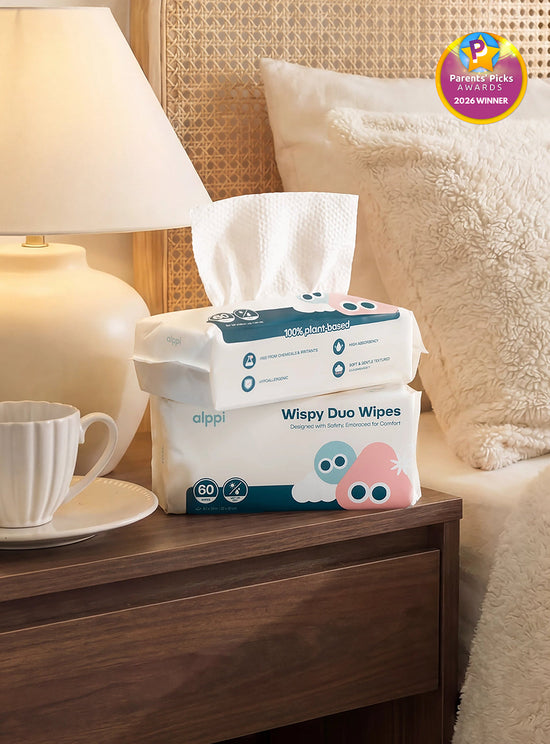
Alppi Training Pants provide a convenient backup layer for parts of a trip when a toilet may not be available right away. Wispy Duo Dry Wipes are compact cleanup supplies that can be used dry or dampened with water, then placed in the trash after use. A Premium Bamboo Sleep Sack can help keep bedtime familiar for a younger child who already uses one at home. Pack the products your child knows, plus spare clothing and a wet bag, and keep the active cleanup kit within reach.
Travel With a Plan, Not Pressure
Successful potty training while traveling is not an accident-free trip. It is a trip where your child gets clear cues, quick help, and a calm response when plans change.
Practice the equipment, pack backups within reach, and anchor potty visits to familiar moments. When you return home, resume your usual routine without making the trip’s accidents a major event.


