


Potty training doesn't have to feel like a guessing game. With the right timing, a simple routine, and a few honest potty training tips, most toddlers get there faster, and with a lot less stress, than parents expect.
If you're searching for potty training tips that actually work, you're already doing the hardest part: looking for a calm, realistic plan instead of a one-size-fits-all rulebook. Below you'll find readiness signs, a step-by-step routine, common mistakes to avoid, and honest timelines for daytime and nighttime training.
- Start potty training based on readiness signs, not a specific age.
- A short, consistent daily potty routine works better than random reminders.
- Avoid pressure, punishment, and comparing your child to others.
- Accidents are a normal, expected part of learning, so plan for them.
- Daytime and nighttime dryness are separate skills that develop on different timelines.
- Reliable training pants, diapers, and dry wipes make the whole process easier on everyone.
Potty Training Tips: Start at the Right Time

Starting when your child is developmentally ready, not on a fixed birthday, reduces power struggles and shortens the overall timeline. Most toddlers show at least a few readiness signs between 18 months and 3 years old.
Signs Your Toddler Is Ready
Use this quick reference table to check readiness. Look for several signs appearing together rather than just one.
| Readiness Sign | What It Looks Like |
|---|---|
| Stays dry longer | Diaper stays dry for 1 to 2 hours at a stretch |
| Shows interest | Follows you to the bathroom or asks questions about the toilet |
| Communicates needs | Says or signals when their diaper is wet or dirty |
| Follows directions | Understands and follows simple two-step instructions |
| Motor skills ready | Can pull pants up and down mostly on their own |
Red Flags to Watch Before You Start
- Fear of the toilet: forcing it now usually backfires later.
- Severe constipation: talk to your pediatrician before training.
- Big life changes: moving, a new sibling, or starting daycare all add stress that slows progress.
Waiting a few extra weeks until your child feels secure can actually shorten the overall training process. For a size-by-size breakdown of when to size up in diapers or training pants during this stage, the Alppi Baby sizing guide is a handy reference to keep nearby.
Potty Training Tips for a Smooth Daily Routine
Consistency builds confidence faster than any single trick. A predictable routine helps your toddler understand when and where to go.
Create a Simple Potty Schedule
| Time of Day | Why It Works |
|---|---|
| Morning | Bladder is fullest right after a night's sleep |
| After meals | Digestion naturally triggers a bowel movement |
| Before naps | Helps prevent accidents during rest |
| Before bedtime | Encourages nighttime dryness over time |
Keep potty sits short, about 3 to 5 minutes, and use gentle reminders instead of constant asking.
Set Up a Potty-Friendly Bathroom
- Child-size potty or a toilet seat insert with a step stool for support.
- Toilet paper and gentle wipes kept within easy reach.
- Elastic-waist pants or loose leggings your toddler can pull down solo; skip overalls, belts, and tight jeans during training.
Great for This Stage: Training Pants
Pull-up style training pants help your toddler actually feel the difference between wet and dry, which builds the body awareness potty training depends on. Alppi Training Pants are cloud-soft, hypoallergenic, and easy for little hands to manage on their own.

Training Pants Monthly Box
Best value for active training: a full month of cloud-soft pull-ups delivered to your door.

Training Pants Weekly Bag
A flexible weekly supply, ideal for the early training phase before you commit to a larger order.

Training Pants Bundles
Stock up and save so you always have a fresh pair ready, because accidents happen when you least expect them.
Potty Training Tips That Prevent Common Mistakes

Knowing what not to do is just as important as knowing what to do. The goal is to build confidence, not pressure.
| Mistake | Why It Slows Progress |
|---|---|
| Starting too early | Child resists and associates the potty with stress |
| Punishing accidents | Creates fear and shame instead of learning |
| Forcing long sits | Turns the potty into a chore to avoid |
| Comparing to other kids | Lowers confidence and adds unnecessary pressure |
A Simple 5-Step Potty Training Plan
Set Up the Right Tools
A small potty chair or seat insert, a step stool, easy-to-remove clothing, training pants, and gentle wipes for cleanup all make the bathroom feel safe and manageable.
Teach Proper Wiping and Hand Washing
Keep instructions short and consistent, and practice together often since this motor skill takes real repetition. Soft, durable dry wipes give small hands the grip they need to clean up properly on their own.
Build a Simple Potty Routine
Sit your toddler on the potty first thing in the morning, after meals, before naps, and before bedtime. If nothing happens, that's fine; praise the effort and move on without making it a big deal.
Use Positive, Low-Key Encouragement
A sticker chart, a clap, or a warm hug all signal success. Avoid any form of punishment for accidents; pressure creates fear and almost always slows progress down.
Stay Calm During Accidents
Accidents are part of learning bladder control. Clean up calmly, remind them to try next time, and keep reliable backup diapers on hand for naps and outings during the transition.
Cleanup Tip
Soft, thick dry wipes hold together better than thin wet wipes, which matters a lot when a toddler is learning to clean up solo. Keep a pack within arm's reach of the potty at all times.
Gentle Wipes and Backup Diapers Made for This Stage
Hypoallergenic, alcohol-free, and dermatologist-tested for everyday use, because accidents happen most in the early days.

Wispy Duo Wipes (Dry)
Use wet or dry. Hypoallergenic, alcohol-free, and dermatologist-tested, perfect for potty training and everyday cleanups on the go.

Wispy Cloud Diaper Weekly Bag
A lighter weekly supply for naps, outings, and on-the-go backup while your toddler is still learning.
The 3-Day Method and Other Popular Potty Training Tips
Some families prefer a fast-track approach; others take it gradually. Both can work well when matched to your child's personality.
What Is the 3-Day Potty Training Method?
- Staying home for three full, distraction-free days.
- Letting your child wear underwear or go bottomless around the house.
- Taking frequent potty breaks and watching closely for signs they need to go.
It works best for toddlers who already show strong readiness signs.
Comparing Fast and Gradual Potty Training Approaches
| Approach | Best For | Pros | Cons |
|---|---|---|---|
| 3-Day Method | Highly ready toddlers | Quick results | Intense and tiring |
| Gradual Method | Sensitive or cautious toddlers | Less pressure | Takes longer |
Gender plays a small role in the process too, since some boys take slightly longer to gain full bladder control, but personality and readiness matter far more than whether you're potty training a boy or a girl. For a girl-specific walkthrough, including front-to-back wiping habits, see our guide on how to potty train a girl.
Potty Training Tips for Daytime and Nighttime
Daytime control typically develops well before nighttime dryness, and that gap is completely normal. Expect shorter holding times during active training.
| Age | Average Bladder Control |
|---|---|
| 2 years old | 1 to 2 hours |
| 3 years old | 2 to 3 hours |
| 4 years old | 3 to 4 hours |
Nighttime Potty Training Tips
- Take your child to the potty right before bed.
- Limit heavy drinks in the hour before sleep.
- Use a mattress protector for the inevitable in-between nights.
Many toddlers keep wearing diapers overnight for months after they're fully daytime trained, and bedwetting can still be normal up to age 5 or beyond, especially during deep sleep. Comfortable, absorbent overnight protection keeps your child dry and confident until their body is ready.
Overnight Comfort While Your Toddler Keeps Learning
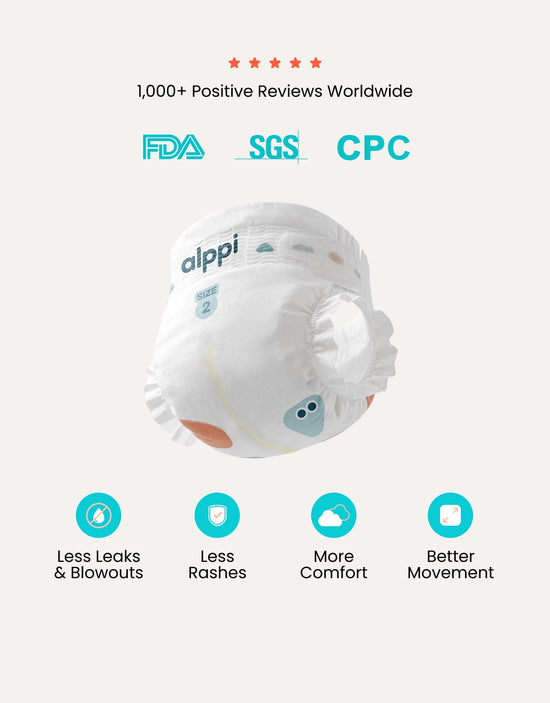
Wispy Cloud Diaper Monthly Box
Cloud-soft, leak-free overnight protection, perfect for toddlers still working on nighttime dryness.

Wispy Cloud Diaper Bundles
Stock up and save, great for families mid-training who still need reliable nighttime coverage.
Handling Potty Training Setbacks with Confidence
Regression is common and usually temporary. Common causes include illness, travel, starting daycare, or the arrival of a new sibling. Stress affects toddlers deeply, even when they can't explain it.
To get back on track: return to a simple potty schedule, offer extra praise, and reduce pressure. Most children regain confidence quickly with steady support.
Contact Your Pediatrician If You Notice
- Pain or crying when urinating
- Repeated urinary tract infections
- Severe constipation or painful bowel movements
- Intense, prolonged fear of the toilet
- Long-lasting regression with no signs of improvement
If a setback lines up with a big transition, it may also help to read about typical toddler behavior during this age. Our guide on the terrible twos covers why big feelings show up right when independence (like potty training) is being asked of them.
Potty Training Tips for Busy Parents
Life is busy, and potty training has to fit into real routines. Planning ahead reduces stress outside the house.
Potty Training On the Go
- Extra clothes and a travel potty seat.
- Dry wipes for quick, mess-free cleanups.
- A backup diaper for emergencies, even after daytime training clicks.
Simple Rewards That Motivate
| Reward Type | Why It Works |
|---|---|
| Sticker charts | Visual progress builds excitement |
| Verbal praise | Boosts confidence in the moment |
| Small treats | Encourages repetition of the behavior |
| High fives | Makes success feel fun, not stressful |
Consistency matters more than the reward itself. Keep a subscription running so you're never caught without supplies mid-training. You can manage cadence and pause anytime from your Alppi Baby subscription.
Stock Up on Potty Training Essentials
Training pants, dry wipes, and overnight diapers: everything you need to support this milestone, delivered to your door on your schedule.
Shop DiapersWhy Parents Choose Alppi Baby for Potty Training
At Alppi Baby, every product is designed with one goal: comfort that feels like a cloud, and peace of mind that lasts all day. Diapers, training pants, and wipes are hypoallergenic, dermatologist-tested, and made with eco-conscious production methods.
Parents come back because the products perform when it counts: no leaks overnight, no irritation from harsh chemicals, and no fighting to get pants up and down during those urgent moments. See the full standards on the Safety and Certifications page, or read what real families say on the Reviews page.
Extra Comfort for Sensitive Skin
Frequent changes during active training can leave delicate skin extra sensitive. If irritation shows up, our Rash-Free Diapers are built specifically for that.

Alppi Rash-Free Diapers
Designed specifically for delicate skin, ideal for the frequent changes that come with active potty training.


