


The best Montessori toys for a 1 year old are not the loud ones with lights and songs.
They are simple, single-purpose toys that let your child do the work: an object permanence box, a stacker, real nesting cups, a small open cup.
After years of watching which toys actually get used on a toddler shelf, the answer is almost always the same. It is the quiet toys that win.
A good Montessori toy waits for the child. It does not flash or sing to grab attention. That quiet is what lets a toddler focus.
- A good Montessori toy for a 1 year old teaches one skill at a time, like grasping, stacking, or posting.
- Wood is common, but a toy does not need to be wooden to count as Montessori. Purpose and simplicity matter more.
- Strong picks for 12 months: object permanence box, ring stacker, nesting cups, push wagon, and a small open cup.
- Skip toys that play music or flash lights for the child. A Montessori toy asks the child to act, not just watch.
- Keep 4 to 8 toys on a low shelf and rotate them every week or two so your toddler stays interested.
What Makes a Toy Truly Montessori?
A Montessori toy is a simple, real-feeling object that lets your toddler repeat one action until they get good at it. At 12 months, your child is moving from baby to toddler.
They may be pulling up to stand, cruising along furniture, and working on that pincer grasp, using the thumb and finger together.
A good toy meets your child right at that stage.
- It teaches one thing well. A stacker teaches stacking. It does not try to do ten things at once.
- It feels real. A real small cup or a realistic animal figure supports a toddler's understanding better than a cartoon version, since young children are still learning to tell fantasy from reality.
- The child stays in charge. The toy waits quietly. It does not need batteries to hold attention, so your toddler learns to focus through their own repeated effort.
Best Montessori Toys for a 1-Year-Old, by Skill

Instead of a random shopping list, here is a simple way to think about a toddler shelf, grouped by the skill your child is likely working on right now.
| Skill Area | Toy Type | What It Helps With |
|---|---|---|
| Fine motor | Object permanence box | Hand-eye coordination and understanding that things still exist out of sight |
| Fine motor | Ring or peg stacker | Wrist and finger control, an early form of the pincer grasp |
| Fine motor | Nesting cups | Sorting by size, in and out play, open-ended exploring |
| Gross motor | Push wagon | Balance and confidence for a toddler learning to walk |
| Language | Realistic animal figures | Early vocabulary as your toddler starts naming things |
| Practical life | Small open cup | Mealtime independence and hands-on practice pouring and drinking |
Quick tip
Watch your child before you shop. If they keep dropping objects into small gaps, a posting toy will likely be a hit. Buy toward what they already do, not what looks impressive on a shelf.
Alppi Montessori Picks for a 1-Year-Old Shelf
If you would rather start with a few tested pieces than build a shelf from scratch, here are three Alppi toys built around the same simple, hands-on ideas covered above.
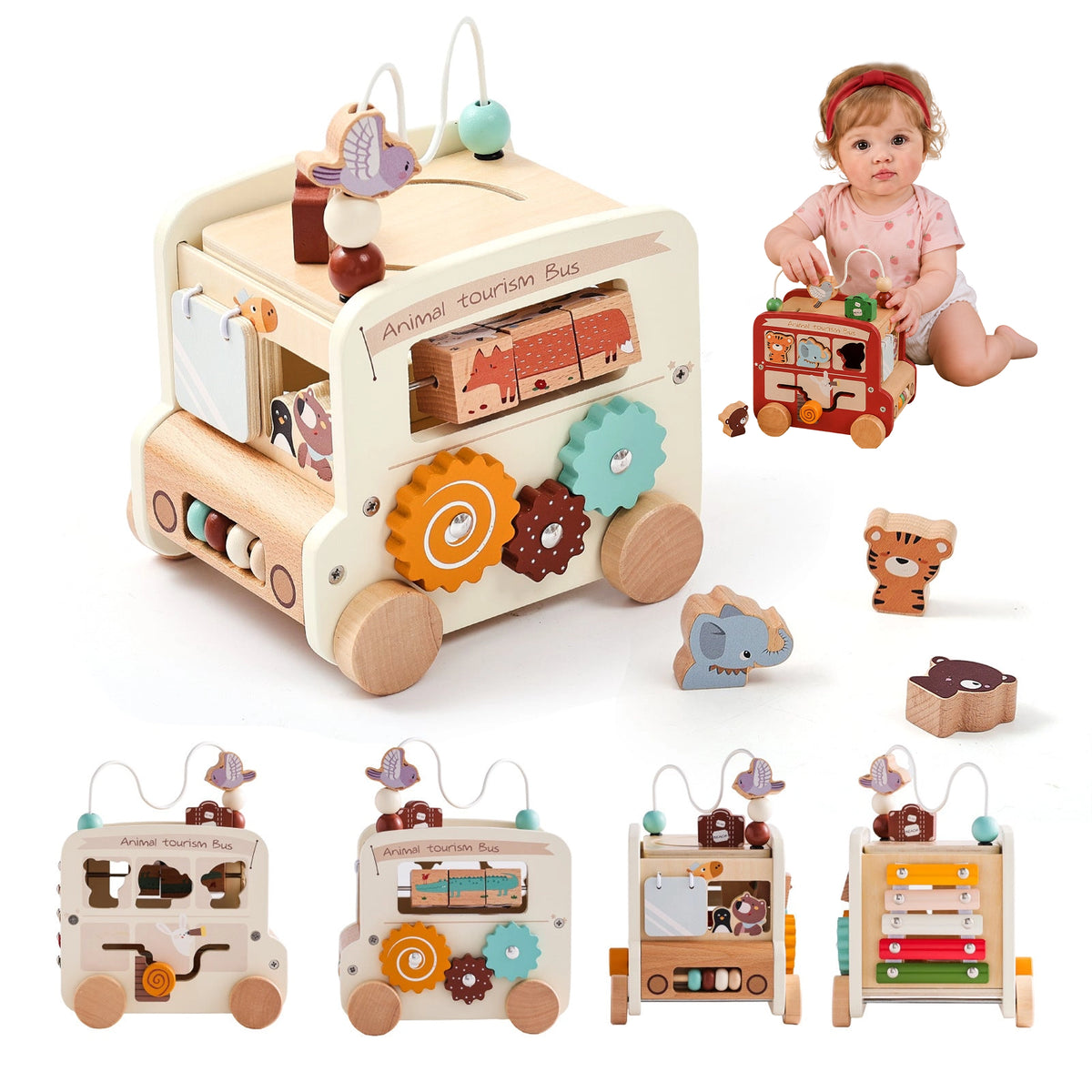
A solid wooden bus with eight built-in activities, including shape sorting, a xylophone, and spinning gears. No batteries, so your toddler drives the play.

Eight soft, food-grade silicone shapes your toddler can stack by size, sort by shape, or nest smallest to largest. Simple enough to use in more than one way.
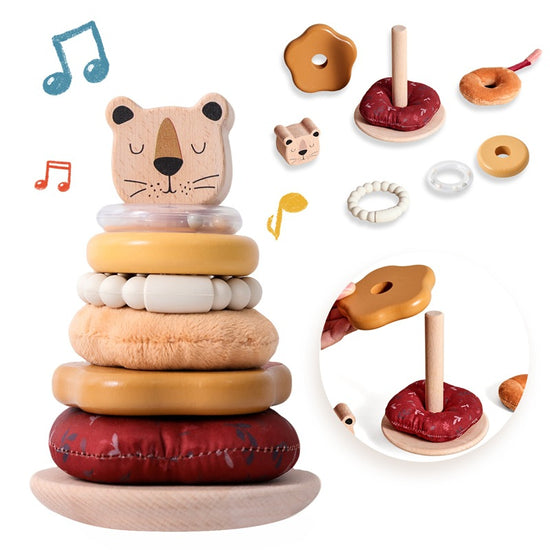
An 8-layer stacker with a different texture on each ring, wood, fabric, and silicone, plus a weighted base so a toddler can stack and topple it on their own.
Why the 12-Month Window Matters
Timing matters here. A large share of a young child's brain growth happens in the first few years of life, and the months around a first birthday bring a real jump in fine and gross motor skills.
A toddler handed toys that match this stage gets to practice the exact skills their brain is busy building. A toddler handed a flashing tablet toy mostly gets entertained instead.
Give a stacker to a toddler working on that skill and watch what happens. They try it, drop a piece, pick it up, and try again.
That repeating is a simple, early form of concentration, and it lays groundwork for focus and confidence later on.
It is also often the first stretch of independent play a family gets, which is good for the toddler and a nice break for the adult too.
Common Mistakes to Avoid:
- Thinking it must be wooden. Wood is popular and durable, but a well-made toy in another material can still be Montessori if it is simple and purposeful.
- Buying too much at once. A shelf packed with toys can overwhelm a toddler. Around 4 to 8 visible toys tends to work better than a big pile.
- Starting too advanced. A shape sorter with ten shapes may frustrate a brand-new one-year-old. Start with one or two shapes.
- Assuming a higher price means a better toy. A simple, well-made set of nesting cups can get more real play than a pricier option.
- Stepping in too fast. When your toddler drops a ring, try pausing before you fix it for them. A little struggle is often part of the learning.
A Simple Step-by-Step Way to Choose Toys

Here is a simple process many parents find useful when building a first Montessori shelf.
Watch your child first
Notice what they already do, like posting objects, stacking, or pushing things around. Pick toys that match.
Pick one toy per skill
One fine motor toy, one gross motor toy, one language toy. That is a simple, complete starter shelf.
Choose simple over flashy
Between two toys, the quieter, more realistic option is usually the stronger pick for this age.
Set up a low, open shelf
Place toys at your child's eye level, one per spot, with a little space around each one.
Show it once, then step back
Demonstrate slowly and calmly, then let your toddler explore on their own without correcting them.
Rotate every week or two
Swap a few toys out on a simple schedule. A "boring" toy often feels new again after some time away.
Age-by-Age Toddler Shelf Guide
Toy needs shift fast in the second year. Here is a simple guide for what tends to work best as your toddler grows.
| Age Range | Typical Focus | Good Toy Types |
|---|---|---|
| 9 to 12 months | Grasping, dropping, early crawling | Soft ball, simple posting box, wooden rings |
| 12 to 18 months | Pincer grasp, first steps, naming objects | Ring stacker, nesting cups, push wagon, open cup |
| 18 to 24 months | Simple sorting, short sentences | Basic shape sorter, chunky puzzles, lacing beads |
Keep the mess simple while they explore
All this hands-on play means sticky hands, spilled water, and small messes. Alppi's gentle wipes and diapers are made to be soft on sensitive skin, so cleanup stays quick and comfortable.
Shop gentle wipesKeep Reading:
Frequently Asked Questions
What are the best Montessori toys for a 1 year old?
What toys should a 12-month-old have, Montessori style?
Are Montessori toys worth it for a 1 year old?
What is the Montessori method for a 1 year old?
What toys do Montessori educators often recommend for toddlers?
Final Thoughts
The best Montessori toys for a 1 year old are the ones that do one thing well, feel real in the hand, and let your toddler lead.
Start with a small shelf of well-chosen pieces, rotate often, and try to hold back from over-helping.
Watching your toddler focus and repeat on their own is usually a good sign you got it right.


