


A bedwetting alarm for kids is one of the most effective tools for building long-term nighttime dryness, without medication and without pressure.
Waking up to wet sheets can feel exhausting for both you and your child. If you are searching for a bedwetting alarm for kids, you probably want something that actually works and helps your little one feel proud in the morning. Bedwetting is common, especially in younger children, and it does not mean you are doing anything wrong as a parent. Keep reading to learn how it works, how to choose the right one, and how to make the whole process easier for your family.
- A bedwetting alarm for kids helps train the brain and bladder to work together during sleep.
- Most children begin improving within a few weeks, but full results typically take 8 to 12 weeks of consistent use.
- Choosing the right alarm type and using it correctly makes a significant difference in results.
- Patience, routine, and positive encouragement matter just as much as the alarm itself.
- Having quality overnight diapers and soft dry wipes on hand makes nighttime changes calmer and easier.
How a Bedwetting Alarm for Kids Works
A bedwetting alarm for kids is a simple tool designed to help children wake up when they begin to urinate during sleep. Over time, with consistent use, it teaches the body to recognize the feeling of a full bladder before an accident happens.
The Mechanism Behind Alarm Training
A small moisture sensor attaches to your child's underwear or pajamas. When it detects the first sign of wetness, it triggers a sound, vibration, or both. The alarm wakes your child so they can finish using the bathroom. With repetition, the brain begins to connect the sensation of a full bladder with waking up, which eventually happens automatically without any alarm at all.
Why This Method Is More Effective Than Others
Bedwetting alarms do not simply manage the problem for one night. They help build a lasting habit of bladder control by addressing the root cause rather than masking it. That is why many pediatricians recommend a bedwetting alarm as a first-line treatment for children who are ready and motivated to try.
| Approach | How It Works | Long-Term Results |
|---|---|---|
| Bedwetting alarm | Trains brain and bladder to respond to fullness during sleep | High success rate with consistent use over 8 to 12 weeks |
| Fluid restriction only | Reduces urine volume before bed | Minimal lasting change, does not train the brain-bladder connection |
| Medication | Reduces urine production or increases bladder capacity temporarily | Bedwetting often returns when medication stops |
| Waiting it out | Relies on natural maturation at roughly 15% improvement per year | Effective over time but slower than alarm training |
Benefits of Using a Bedwetting Alarm for Kids

Understanding what makes this method different helps families commit to it long enough to see real results.
- Long-term dry nights - once your child learns to wake up on their own, the improvement almost always sticks.
- Drug-free and natural - no chemicals involved, just behaviour training and consistent routine.
- Builds genuine confidence - dry mornings give children real pride in their own progress.
- Works for a wide age range - most effective from age 5 onward when the child is motivated to try.
- Recommended by pediatricians - alarm training is widely considered the most effective non-medication treatment available.
Choosing the Best Bedwetting Alarm for Kids
There are several types of bedwetting alarms available and not all work equally well for every child. Picking the right one depends on your child's sleep habits, age, and comfort level.
Types of Bedwetting Alarm for Kids
| Alarm Type | How It Works | Best For |
|---|---|---|
| Wearable clip-on alarm | Sensor clips to underwear, alarm unit attaches to collar or wrist | Most children, fast moisture detection |
| Wireless alarm with bedside receiver | Sensor sends signal to a separate unit across the room | Heavy sleepers who need louder or more distant alerts |
| Pad-style alarm | Placed under the fitted sheet, detects moisture from below | Younger children or those who resist wearable sensors |
Features to Look For
- Adjustable volume levels so you can increase sensitivity for deeper sleepers.
- Vibration mode as an additional alert for children who sleep through sound alone.
- Comfortable, secure sensor clip that does not irritate skin or feel bulky during sleep.
- Easy cleaning because the sensor will need regular maintenance throughout training.
- Durable materials that hold up to months of nightly use without failing.
Comfort Tip
If the alarm feels bulky or irritating, your child may resist wearing it altogether. Let your child try it on before the first night so it feels familiar, not surprising, when the time comes.
How to Use a Bedwetting Alarm for Kids Effectively
Using the alarm correctly matters just as much as choosing the right one. Consistency is the single most important factor in how quickly results appear.
Set up the alarm before the first night
Attach the moisture sensor according to the product instructions. Make sure it is positioned where it can detect the very first sign of wetness. Test the alarm before bedtime so your child knows exactly what it sounds and feels like. Familiarity removes fear.
Respond calmly when the alarm sounds
Go to your child as soon as you hear the alarm. Gently wake them if needed, walk them to the bathroom to finish urinating, and help them change into dry clothes. Reset the alarm before going back to sleep. Keep the mood calm and supportive every single time, even when it feels tiring at 2am.
Build a consistent bedtime routine around it
Encourage bathroom use right before bed every night without exception. Limit large drinks one to two hours before sleep. Use a sticker chart or simple reward system to keep motivation high. The routine surrounding the alarm matters as much as the alarm itself.
Keep extra supplies within easy reach
Have dry pajamas, a clean fitted sheet, and gentle wipes within arm's reach of the bed. The faster and calmer a change happens, the less sleep is disrupted for both your child and you. Layer the bedding with a mattress protector, sheet, another protector, and another sheet so you can simply peel off the top two layers without any fuss.
Overnight Protection During Alarm Training
Many families keep absorbent overnight diapers on hand during the early weeks of alarm training, especially as a backup on nights when your child is unwell or very tired. Alppi Wispy Cloud Diapers are soft, breathable, and gentle on sensitive skin through long nights.
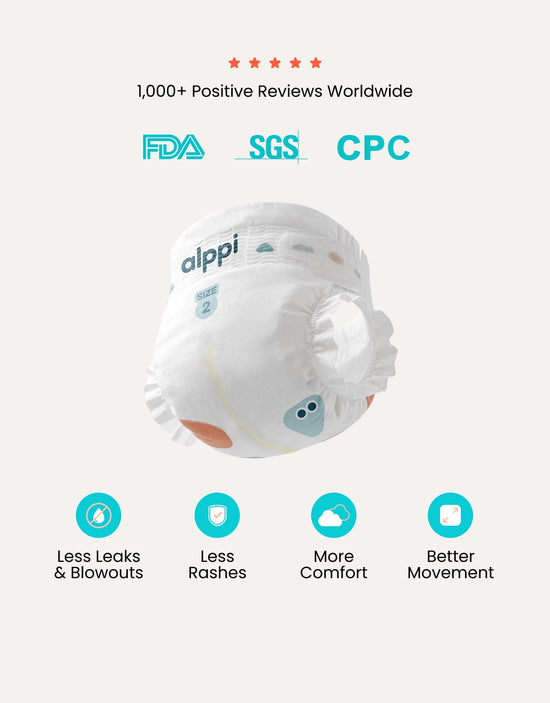
Wispy Cloud Diaper Monthly Box
Cloud-soft overnight protection. Ideal for the early weeks of alarm training when accidents are still frequent and a backup layer keeps mornings calmer.

Wispy Cloud Diaper Weekly Bag
A flexible weekly supply. Perfect as your child progresses through training and needs fewer diapers each week as dry nights increase.
How Long to Use a Bedwetting Alarm for Kids

Results do not usually happen overnight, and that is expected. Most children start to show improvement within a few weeks, but full, lasting results typically take 8 to 12 weeks of consistent nightly use. Many experts recommend continuing until your child has achieved at least 14 consecutive dry nights. Stopping too early is one of the most common reasons for setbacks.
Progress tends to be slow at first, then improves quickly once the brain-bladder connection begins forming. A pattern of two dry nights, one wet night, three dry nights is completely normal and a positive sign that training is working.
Progress Tip
Keep a simple dry-night calendar on the bedroom wall. Seeing a row of dry-night stickers grow week by week gives your child concrete evidence of their own improvement and keeps motivation strong through the slower early weeks.
Common Challenges with a Bedwetting Alarm for Kids
Even the best bedwetting alarm for kids can come with bumps along the way. Knowing what to expect helps you stay calm and consistent through them.
Sleeping Through the Alarm
If your child does not wake up when the alarm sounds, go to them as soon as you hear it yourself. Gently wake them fully and have them walk to the bathroom under their own power. Over time, their brain will learn to respond independently. Some families find a wireless bedside receiver helpful in the first few weeks because it alerts the parent faster.
False Alarms or Sensor Issues
Sweat or incorrect sensor placement can sometimes trigger the alarm without an actual accident. Make sure the sensor is dry and positioned correctly each night before sleep. Clean it regularly according to the manufacturer's instructions to keep it working reliably.
Slow or Uneven Progress
Some children improve quickly while others need considerably more time. Progress is almost never perfectly linear. Keep the routine consistent and focus on encouragement rather than disappointment. During this phase, having dependable supplies stocked at home removes one layer of stress.
Gentle Wipes and Reliable Bundles for Training Nights
Soft, hypoallergenic dry wipes make middle-of-the-night cleanups quick and gentle. Paired with a value diaper bundle, you stay stocked and prepared through the full 8 to 12 week training window.

Wispy Duo Wipes (Dry)
Use wet or dry. Hypoallergenic, alcohol-free, and dermatologist-tested. Gentle on sensitive skin during repeated overnight cleanups.

Wispy Cloud Diaper Bundles
Stock up and save. A practical choice for the full training window when nightly backup protection keeps stress low for the whole family.
Bedwetting Alarm for Kids: Age and Readiness
Bedwetting is common in younger children, particularly under age seven. About 15 percent of children outgrow it each year without any treatment, and a bedwetting alarm can meaningfully speed up that progress once a child is genuinely ready and motivated.
When to Start Alarm Training
Most experts recommend starting when your child is at least five to six years old, actively wants to stay dry at night, and can understand and follow simple instructions consistently. Motivation plays a particularly important role. If your child feels excited about the idea of dry mornings, the alarm is considerably more likely to produce fast, lasting results.
| Readiness Sign | Why It Matters |
|---|---|
| At least 5 to 6 years old | Bladder and brain connection is developed enough to respond to alarm training |
| Wants to stay dry at night | Motivation is the strongest predictor of alarm training success |
| Can follow simple instructions | Child needs to wake up, walk to bathroom, and reset the routine independently over time |
| Bedwetting bothers them | Personal investment in the outcome makes consistent effort more sustainable |
Supporting Your Child Emotionally During Alarm Training
Bedwetting can feel embarrassing for children, even when they know it is common. Your reaction and the environment you create at home make a bigger difference than almost anything else.
- Praise effort, not just dry nights - acknowledge the courage it takes to try something new.
- Avoid punishment or teasing - shame makes the process longer, not shorter.
- Talk openly and calmly about progress - normalize the process by treating it as ordinary and manageable.
- Use small rewards - letting your child pick a bedtime story or earn a sticker keeps things positive without creating pressure.
- Keep bedtime comfortable and predictable - soft pajamas, breathable bedding, and a calm routine all support better sleep and better results.
Training Pants as a Confidence Bridge
Some families use Alppi Training Pants alongside alarm training. They pull up and down like underwear so your child feels the independence of big-kid clothing, while still providing a protective layer during the early weeks when accidents are still happening most nights.

Training Pants Monthly Box
Best value for the full training window. Pull-up style that feels like underwear but offers reassurance through the night.

Training Pants Weekly Bag
A flexible weekly supply. Good for testing the approach before committing to a larger order during training.

Training Pants Bundles
Stock up and save through the full 8 to 12 week training window. Always have a fresh pair ready when you need one.
When to Talk to a Doctor
Bedwetting is common and usually nothing to worry about, but certain signs are worth discussing with a pediatrician regardless of whether you are using an alarm or not.
Contact Your Pediatrician If You Notice
- Bedwetting starts again after months of reliable dryness
- Pain or discomfort during urination alongside bedwetting
- Daytime accidents happening frequently after your child was already trained
- Extreme thirst or unusual fatigue alongside nighttime wetting
- Bedwetting continues consistently past age 7 without improvement
Stay Stocked Through the Full Training Window
Overnight diapers, training pants, and gentle dry wipes. Everything you need to support bedwetting alarm training calmly and consistently, delivered to your door on your schedule.
Manage Your SubscriptionWhy Parents Choose Alppi Baby During Bedwetting Training
At Alppi Baby, every product is made to give your child comfort that feels like a cloud and give you peace of mind through long nights. Diapers, training pants, and wipes are hypoallergenic, dermatologist-tested, and made with eco-conscious materials, so you feel good about what touches your child's skin night after night throughout the training process.
Read what real families say on the Reviews page, or learn what goes into every product on the Safety and Certifications page.
Starter Options Worth Considering
Not sure where to begin? The Rash-Free Diaper is ideal for children with extra-sensitive skin who wear overnight protection for extended hours during training, while the Newborn Special makes a thoughtful gift for any family starting their Alppi journey.

Alppi Rash-Free Diapers
Designed for delicate skin worn overnight. Ideal for children in the early weeks of alarm training when overnight protection is still needed every night.

Alppi Newborn Special
A curated starter set and a thoughtful gift for any family trying Alppi Baby products for the first time.


