


Starting solids is a big step. You might be wondering which foods are safe, how to cut them, or whether your baby will eat anything at all.
Baby-led weaning (BLW) lets babies explore soft, graspable foods and feed themselves at their own pace, while breast milk or formula stays their main source of nutrition through the first year. It's one of the most exciting month-by-month milestones of all. Below are practical baby-led weaning first foods, serving tips, and ways to make early meals safer and less stressful.
- Many babies are ready for solids around 6 months, when they show signs of readiness.
- Start with soft, easy-to-manage foods, including iron-rich options.
- Prepare food to suit your baby's skills and supervise every meal.
- Gagging and choking are different, so learn the signs and infant choking first aid before starting.
- Keep offering food without pressure. Early meals are for learning.
Baby-Led Weaning First Foods at a Glance
The best baby-led weaning first foods are soft enough to mash easily and simple for your baby to hold. Aim for variety, including iron-rich choices, rather than searching for one perfect first food.
| Food Group | First-Food Ideas | How to Prepare |
|---|---|---|
| Iron-rich foods | Tender beef or chicken, boneless flaked fish, well-cooked lentils | Cook until soft and remove bones and tough parts |
| Soft fruits | Ripe banana, avocado, peach, pear, or mango | Serve in a manageable shape and remove pits and hard skins |
| Soft vegetables | Broccoli, sweet potato, or squash | Steam or roast until easy to squash between your fingers |
| Other options | Plain, pasteurized, full-fat yogurt and fully cooked egg | Offer yogurt on a preloaded spoon and egg in a suitable texture |
Start with one or two foods at a meal. Your baby may lick, squish, or drop food before eating much, and that's a normal part of learning.
Is Your Baby Ready for Baby-Led Weaning at 6 Months?

Many babies are ready to try solids around 6 months, but age alone doesn't tell you whether your baby is prepared. Most babies don't need solids before about 6 months, and solids shouldn't start before 4 months. In fact, our 4 month old milestones guide explains why breast milk or formula is still the way to go at that age.
Your baby may be ready when they can:
- Sit upright with steady head control.
- Reach for food and bring objects to their mouth.
- Swallow food instead of pushing it back out each time.
Your baby doesn't need teeth to try soft foods. Babies can mash many foods with their gums, as long as the texture and shape match their abilities.
Check In First If Needed
Talk with your baby's health professional before starting if your baby was born prematurely or has a medical, feeding, or developmental concern. The Centers for Disease Control and Prevention (CDC) also recommends watching for these readiness signs rather than going by age alone.
Best First Foods for Baby-Led Weaning
Offer different flavors and textures over time, with an emphasis on foods that provide iron and other nutrients. Prepare each food so it's soft and easy for your baby to manage.
Iron-Rich First Foods
Iron is an important nutrient as babies begin eating solids. Try tender strips of meat, soft shredded chicken, boneless flaked fish, or well-cooked lentils. Iron-fortified oatmeal is another option. Serve it on a preloaded spoon so your baby can hold it and bring it to their mouth.
Soft Fruit for First Finger Foods
Ripe fruits are easy to hold and explore. Offer fruit in a soft size and shape your baby can manage, and cook firm fruit until soft. Ripe avocado is soft but slippery, so you can leave part of the peel on as a grip, as long as your baby doesn't eat the peel.
Soft Vegetables for First Finger Foods
Steam or roast vegetables until you can squash them easily between your fingers. Broccoli florets, sweet potato wedges, and soft squash are simple choices. Let cooked food cool before serving.
Other Simple BLW First Foods
Plain, pasteurized, full-fat yogurt works well on a preloaded spoon, and fully cooked egg can be served in an age-appropriate texture. Yogurt is fine as a food, but cow's milk shouldn't be served as a drink before 12 months.
How to Prepare and Serve Baby-Led Weaning First Foods
Safe preparation matters just as much as the food you choose. Cook firm foods until soft, and prepare each piece to suit your baby's feeding skills. No shape or method removes all choking risk.
| Preparation Check | What to Do |
|---|---|
| Texture | Cook food until it squashes easily between your fingers |
| Shape | Choose a size and shape your baby can grasp and manage |
| Hazards | Remove bones, pits, hard skins, and tough strings |
| Mealtime setup | Seat your baby upright and stay close the whole meal |
| Seasoning | Skip added salt and sugar |
Don't put food into your baby's mouth or encourage them to bite before they're ready. Offer food within reach and let your baby explore at their own pace. You choose and prepare safe foods, and your baby decides whether and how much to eat.
As fingers get more precise, babies move from palming food to pinching smaller pieces, a skill you'll see develop around the 10 month baby milestones stage.
BLW is gloriously messy. Keep wipes within reach of the high chair for hands, faces, and trays, and expect a few extra diaper changes as your baby's digestion adjusts to solids.

Wispy Duo Wipes (Dry)
Add water for avocado-covered cheeks, sticky fingers, and high-chair trays after every BLW meal.

Wispy Cloud Diaper Weekly Bag
A week of breathable diapers in resealable daily packs, ready for the changes that come with starting solids.

Wispy Cloud Diaper Bundles
Two weeks of soft, absorbent diapers at a discount, so you're stocked as routines change.
A Simple First-Week Baby-Led Weaning Food Plan
A first-week plan can make shopping and meal prep easier, but there's no set order your baby must follow. Treat these ideas as a flexible starting point, and keep breast milk or formula feeds as usual.
| Days | Food Ideas |
|---|---|
| Days 1 and 2 | Soft avocado, steamed broccoli, or a sweet potato wedge |
| Days 3 and 4 | Ripe banana, well-cooked lentils, or iron-fortified oatmeal on a preloaded spoon |
| Days 5 to 7 | Fully cooked egg, tender chicken, or soft pear |
Repeat foods your baby has tried or swap in another safe option. Some babies dive right in, while others need time and repeated, pressure-free chances to explore. By around 9 months, many babies are eating several small meals a day, as our 9 month baby milestones guide explains.
Baby-Led Weaning Gagging vs. Choking
Gagging can happen as babies learn to move food around their mouths, but choking is an emergency. Sound alone can't tell you for sure that a baby is safe, so learn infant choking first aid before starting solids.
| Gagging | Choking |
|---|---|
| Often noisy, with coughing or retching | May be silent. Baby may be unable to breathe, cough, or cry |
| Can be a normal part of learning to manage food | An emergency that needs immediate action |
If Your Baby Can't Breathe, Cough, or Cry
Call 911 and begin the infant choking first aid you've learned. Lower the risk by preparing food in suitable shapes and textures, keeping your baby upright, and staying within arm's reach. Never leave your baby alone with food, even for a moment.
Foods to Avoid or Prepare With Care

Some foods are unsafe for babies, while others need to be changed before serving. When in doubt, ask your baby's health professional about a specific food or preparation method.
- No honey before 12 months.
- Avoid unpasteurized foods and undercooked meat, fish, or eggs.
- Avoid or modify choking hazards like whole grapes, whole nuts, popcorn, hard raw vegetables, and hard chunks of fruit.
- Take extra care with round hot dog slices, chunks of meat or cheese, and thick or sticky nut butter.
- Limit added salt and sugar.
- Choose low-mercury fish and remove all bones.
Many foods can be made safer by changing their shape or texture, but preparation can't remove all choking risk. Never serve whole nuts or other hard foods a baby can't chew safely.
Introducing Allergens With Baby-Led Weaning First Foods
Common food allergens can be introduced when your baby starts solids, in a form that's safe for their age and skills. If your baby has severe eczema or an egg allergy, ask their health professional before introducing peanut, and seek guidance for any known food allergy or other concern.
Once your baby has tried an allergen without a reaction, regular servings help keep it in their diet. There's no universal rule to wait four days between every new food, though introducing foods one at a time can make a possible reaction easier to spot. Your clinician can recommend a plan if your baby needs extra guidance.
Starting solids often changes what you find in the diaper, too. Soft, breathable Wispy Cloud Diapers help keep sensitive skin comfortable through the transition.

Diaper + Dry Wipes Value Combo (Weekly)
A week of diapers and dry wipes together, perfect for your first week of BLW.
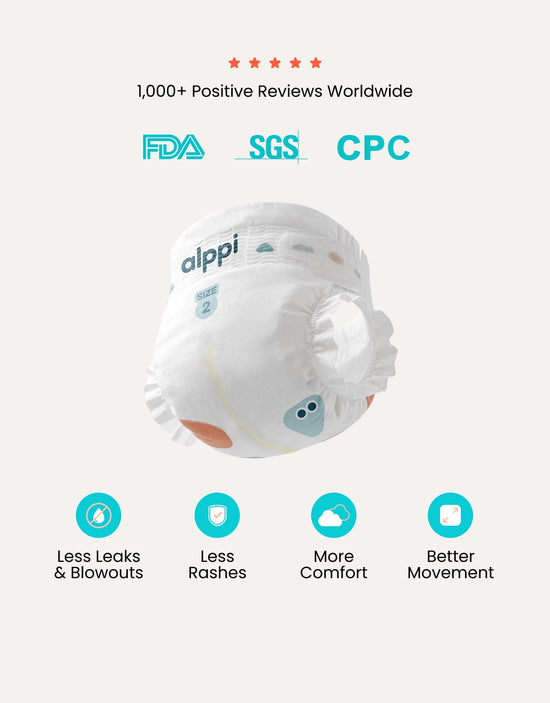
Wispy Cloud Diaper Monthly Box
A full month of breathable diapers delivered, so you can focus on mealtimes instead of store runs.
Why Parents Trust Alppi Baby Through Every New Stage
From first tastes to first steps, comfort matters. Alppi Baby diapers and dry wipes are hypoallergenic, dermatologist-tested, and free from fragrances and harsh chemicals, so your baby stays comfortable through every messy, milestone-filled meal.
See the full testing standards on our Safety and Certifications page, or read what other parents are saying on our Reviews page.

Diaper + Dry Wipes Value Combo (Monthly)
A full month of diapers plus dry wipes in one order, ready for high-chair cleanups and quick changes.
Messy Meals, Happy Babies
Soft diapers and gentle dry wipes that make starting solids, and the cleanup after, a little easier.
Explore Alppi Baby


